Healing After a Breakup — When the Person You Loved Is Gone and You're Still Here
Breakups don't feel like what they look like from the outside. From the outside, they look like the end of a relationship — something that was there and then wasn't. From the inside, they can feel more like an amputation. A self that existed partly in relation to another person, suddenly having to figure out where it ends and where ordinary life begins.
The grief after a breakup is real grief. It has the same structure, the same non-linearity, the same tendency to ambush you in unexpected moments. And it tends to be underestimated — both by the people around you and, sometimes, by yourself.
The Ambiguous Loss
Breakups have a quality that bereavement doesn't: the person is still alive. Which means they're out there somewhere, in the world, in the lives of people you share. Which means, potentially, that you encounter them — at a mutual friend's birthday, on social media, in the memory of your phone suggesting you share a photo. The loss has no clear edge.
This ambiguity makes it harder to grieve cleanly. There's no occasion for grief to be publicly acknowledged in the way a death allows. There's no ritual that marks the end. You're just meant to get on with it. And often the implicit timeline other people seem to expect is much shorter than the actual timeline of how it feels.
When You Didn't Want It to End
If the relationship ended not because you chose it but because it was chosen for you — a rejection, someone leaving, a unilateral decision — the grief comes tangled with other things. Rejection is one of the most painful human experiences. The mind loops over what happened, looking for the thing that would have made it different. What you could have done. What you should have said. What it means about you.
The loop is hard to stop, and trying to stop it directly often doesn't work. What helps is understanding what the loop is doing: it's trying to restore a sense of control after an experience that made you feel like you had none. The analysis is an attempt to find the lever. But there isn't one, and eventually the mind has to accept that.
When You Were the One Who Left
Grief after choosing to leave a relationship is its own complicated thing. You made the decision. You knew it was right, or at least that it was necessary. And you're still gutted. You still miss them. You're still woken up by the weight of what you've lost.
People don't always expect this. There's a cultural assumption that choosing to end something means you're okay, that you've already processed it, that you move on faster. But grief doesn't follow the logic of decision-making. The loss is real whether or not you authored it.
If anything, choosing to leave can carry its own specific weight: the responsibility for someone else's pain. The second-guessing. The possibility, always present, that you made a mistake.
Who You Are Without Them
One of the harder aspects of breakup recovery — particularly after a significant relationship — is the identity question it opens. For a long time, you were partly organised around another person. Their preferences, routines, needs, and presence shaped your days. You made choices factoring them in. Some of your sense of self was held in how they saw you.
When that's gone, there's an emptiness that isn't just about missing the person. It's about the parts of yourself that existed in relation to them. Which parts were genuinely you, and which were adaptations? What do you want, without a partner's preferences in the frame?
These questions take time to answer. And they deserve somewhere to be explored — not at the bottom of a dating app, not in the managed performance of "moving on," but honestly, at whatever pace the honesty allows.
On Moving On
"Moving on" is the language everyone uses, and it's not wrong — but it implies a leaving behind that doesn't quite match how healing actually works. You don't move on from significant relationships so much as you integrate them. They become part of your history, part of what shaped you, held with more and more ease over time until they stop being a wound and become simply part of the landscape you carry.
Getting there doesn't require doing it alone. And it doesn't require pretending you're further along than you are.
Asclepiad is a space for the honest version — for saying what's actually true right now, in this week or this month, without having to perform a recovery that hasn't happened yet. Maia will meet you where you are. Hortus carries stories about loss and what comes after — old myths that know something about loving, losing, and finding your way back to yourself.
---
You don't have to be over it. You just need somewhere honest to be in it. asclepiad.ai/?context=relationship

The patterns we carry into love aren’t flaws. They’re survival strategies that outlived their purpose.
Your AI guide — here to listen, without judgment.
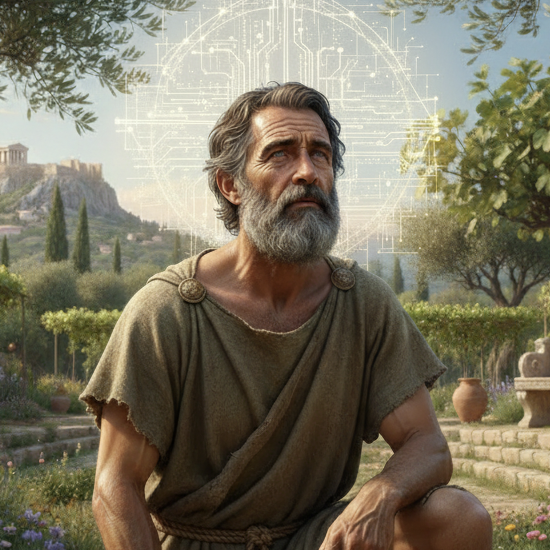
Every love story in mythology is also a story about losing yourself — and the long walk back to who you were before.
Storyteller — old stories that tend to know things.
Frequently Asked Questions
Is this like a breakup coach or counsellor?
No. Asclepiad is not a coaching service. Maia is an AI companion who listens and creates personalised reflections from what you share. She won't give you a recovery plan — she'll be present with whatever you're actually feeling.
How is this different from journaling?
Journaling is you talking to yourself. Asclepiad is you being heard. Maia responds — with reflections, letters, or stories shaped around what you've shared. The experience of being witnessed, even by an AI, changes the quality of the processing.
Is it private?
Completely. No account, no name, no email. Your session is anonymous.
What if I'm not over it?
Good. You don't have to be. Asclepiad is designed for wherever you actually are — not where you think you should be.
If you're ready to be heard — not fixed, not optimised, just heard — Maia is here.
Talk to MaiaNo sign-up. No programme. Just presence.