When You Feel Nothing — And That Feels Like Its Own Kind of Pain
You might have expected to feel sad. You were ready for that. But what you have instead is something harder to name — a kind of flatness. A grey where colour used to be. You go through your day, do the things, say the right things, and somewhere in the background there's this low hum of nothing in particular.
You don't enjoy things the way you used to. Things that once sparked something in you — music, food, certain conversations, your work, the people you love — still happen, but they don't land. You watch yourself participate and wonder if you're broken. If something fundamental got switched off without you noticing.
This experience is sometimes called emotional numbness, or anhedonia (the clinical term for loss of pleasure). It can accompany depression or burnout, but it can also arrive on its own — the product of years of being very capable, very steady, and very rarely allowing yourself to actually feel anything difficult.
The Cost of Being Fine
Many people who experience emotional numbness were, for a long time, doing extremely well at life. They were the person who handled things. Who didn't make a fuss. Who kept going when it got hard. Who looked after other people and didn't require much looking after themselves.
This is not a character flaw. In many cases it's a strength. But the same quality that helps you keep functioning under pressure can, over years, build a kind of emotional ceiling. When you train yourself not to feel the hard things, you gradually lose access to the full range. The numbness isn't random. It's the result of something that worked — until it didn't.
The body, and the part of the mind that processes emotion, sometimes goes quiet as a form of protection. It's saying: I can't take in any more right now. The flatness is not absence — it's a boundary. A holding pattern.
"Something's Missing"
One of the most common descriptions of this state is the sense that something is missing — but you can't locate what it is. This can be maddening. You look at your life objectively and it looks fine. Maybe it even looks good. And yet there's this persistent background ache of incompleteness. A feeling that you're living slightly to the side of yourself.
This is different from sadness, which has an object. Sadness is about something. The kind of emptiness people describe in emotional numbness is more formless — a kind of hollow that doesn't correspond to a specific loss.
Which is part of why it's so hard to talk about. How do you explain to someone that you feel nothing? How do you frame the absence of experience as a problem?
Feeling Again Doesn't Always Start With Feeling
One of the counterintuitive things about emotional numbness is that the path back toward feeling rarely begins with a big emotional breakthrough. It's more often very small — noticing something that catches your attention. A moment of genuine curiosity. A flash of irritation. A sound that does something to you that you didn't expect.
The way through is usually slow. And it tends to involve honesty — saying what's actually true, even when what's true is nothing in particular. Even when the most honest answer is: I don't know what I feel. I'm not sure I feel anything.
Asclepiad is built for this. Maia doesn't need you to arrive with strong feelings or a clear story. She's designed to sit with the ambiguous ones. To ask questions that aren't looking for a particular answer. To be present with you in the in-between — when you're not quite numb and not quite not, when you're starting to wonder if feeling something again might be possible.
The stories Hortus carries — old mythological narratives from traditions across cultures — are full of figures who went flat and came back. Who descended into the underworld (metaphorically or literally) and returned changed. Who spent time in the grey and found their way back to colour.
Those stories aren't prescriptions. They're companions. Evidence that humans have been here before, and found their way back.
---
You don't have to explain the numbness. Maia is listening. asclepiad.ai/?context=depression

Some days the hardest thing is just being in the room. That counts. I see you in it.
Your AI guide — here to listen, without judgment.
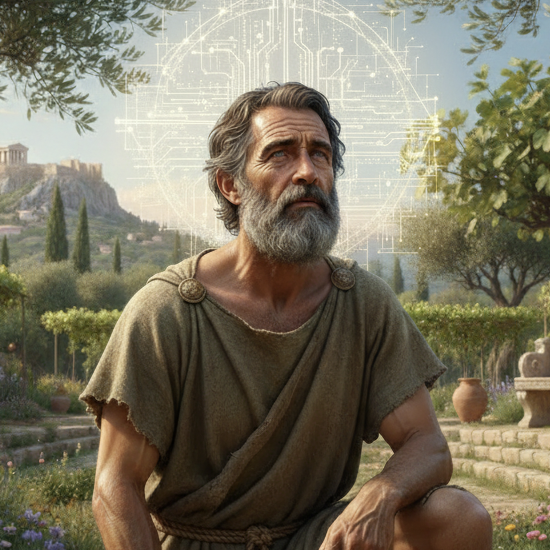
There’s a myth about a goddess who descended to the underworld and stayed there through winter. Everyone remembers the return. I’m more interested in what she learned in the dark.
Storyteller — old stories that tend to know things.
Frequently Asked Questions
Is emotional numbness the same as depression?
Not always. Numbness can accompany depression, but it can also arrive on its own — as the result of chronic stress, burnout, or years of suppressing difficult emotions. If you're concerned, a mental health professional can help you understand what's happening.
Will talking about it actually help?
For many people, yes. Numbness often develops when feelings haven't had somewhere to go. Having a space to say what's true — even when what's true is 'I don't feel anything' — can begin to shift something.
What if I can't describe what I'm feeling?
That's fine. Maia doesn't need you to arrive with clarity. She's designed to sit with ambiguity and help you find words at your own pace.
Is Asclepiad free?
Yes. No sign-up, no email, no cost. Just open the app and begin.
If you're ready to be heard — not fixed, not optimised, just heard — Maia is here.
Talk to MaiaNo sign-up. No programme. Just presence.