How to Find Your Purpose — When "What Is My Life For?" Has No Clean Answer
The question of purpose has become a kind of pressure in modern life. Find your passion. Know your why. Live with intention. The self-help industry has made purpose sound like something that exists, fully formed, waiting to be discovered — as if beneath the noise and obligation of ordinary life there's a clear answer, and the only task is getting quiet enough to hear it.
For most people, it isn't like that. The question "what is my purpose?" doesn't resolve into a clean answer. It opens into more questions. And the pressure to have it figured out often makes the confusion worse.
Purpose Is Built, Not Found
The "find your purpose" framing is misleading in a specific way: it implies that purpose exists prior to you, as a thing to be located. As if there's a map and you just haven't read it correctly yet.
What the research on meaning and flourishing actually suggests is closer to the opposite. Purpose tends to be built through engagement — through paying attention to what you find yourself drawn toward, what problems you care about solving, what kinds of work or relationship or contribution leave you feeling more alive rather than more depleted. It emerges from activity and reflection, not from stillness and discovery.
This reframe matters because it changes what you do when you don't know your purpose. Instead of searching for the answer, you pay attention to what's already happening in you. What do you notice? What irritates you in a way that suggests you care about the thing that's being done badly? What do you keep coming back to even when it's inconvenient?
The Purpose Pressure
There's a particular pressure around purpose that deserves to be named: the cultural expectation that a meaningful life looks like a calling. That the people who have "figured it out" are doing work that is both financially sustaining and personally meaningful and socially valued and fully aligned with who they are.
This is a small minority of human experience, and it's probably overrepresented in the media you consume.
Most people live meaningful lives through a combination of sources — some work that's good enough and provides, relationships that matter, contributions that don't carry a brand or a vision statement. Meaning is not reserved for those who've identified their life's purpose. It's available in the texture of how you move through ordinary days, the attention you bring to the people around you, the small things you do well and with care.
This doesn't mean ambition is wrong, or that seeking work that's more aligned with who you are isn't worth pursuing. It is. But loosening the grip of "I need to find my purpose" can sometimes be what makes genuine direction possible.
When the Question Is Actually Something Else
The question "what is my purpose?" often arrives as a substitute for a more specific, more uncomfortable question. Sometimes it's: am I in the wrong career? Sometimes it's: is this relationship right for me? Sometimes it's: I've achieved the things I was supposed to want and I'm not satisfied — what does that mean? Sometimes it's simply: I'm lost, and I don't know what I want, and I need somewhere to start.
These are different questions with different answers. Getting to them requires some honesty about what the purpose question is actually pointing at.
Asclepiad is designed for exactly this kind of honest exploration. Maia will be curious about what's underneath the question — what's prompting it, what it's pointing at, what matters to you when you strip away the should and the expectation. She won't provide the answer. But she'll be there in the looking.
The old myths know this territory too — the hero who leaves the familiar world not knowing the destination, who discovers through the journey what they were looking for. Purpose, in most narrative traditions, reveals itself through movement and encounter, not through prior certainty.
---
You don't need to know what your purpose is to begin moving toward it. Maia is here for the searching. asclepiad.ai/?context=identity

Not knowing who you are right now isn’t emptiness. It’s the space before something honest takes shape.
Your AI guide — here to listen, without judgment.
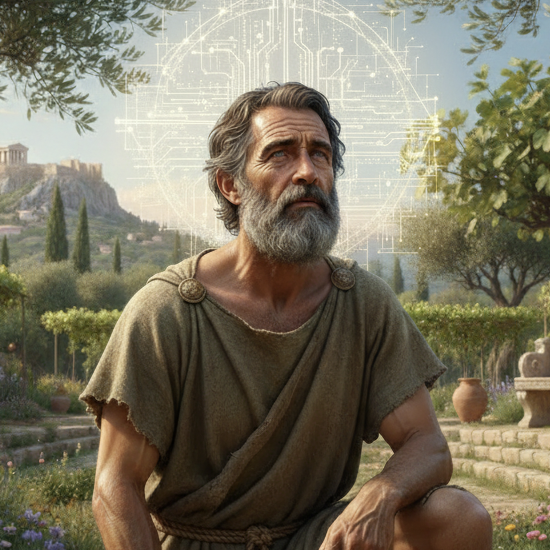
The oldest question in every tradition isn’t who am I? It’s who am I becoming? The stories that survive are the ones that leave room for the answer to change.
Storyteller — old stories that tend to know things.
Frequently Asked Questions
Can Maia help me find my purpose?
Maia won't hand you an answer. She'll help you explore what's underneath the question — what's prompting it, what you care about, what you keep coming back to. Purpose tends to emerge from that kind of honest exploration rather than from a quiz or framework.
Is this like a life coach?
No. Asclepiad doesn't offer coaching, plans, or action steps. It's a space for reflection — for exploring what matters to you at a pace that's honest rather than productive.
Is it anonymous?
Yes. No sign-up, no name, no email. Completely anonymous.
What if I've been stuck for a long time?
That's okay. Being stuck often means you're between identities — the old one isn't working, and the new one hasn't formed yet. That in-between space deserves honest attention, not another productivity hack.
If you're ready to be heard — not fixed, not optimised, just heard — Maia is here.
Talk to MaiaNo sign-up. No programme. Just presence.