Grief After Losing a Parent — The Loss Nobody Quite Prepares You For
There's a before and an after. You know it the moment it happens. The world before your parent died, and the world after — and they are not the same world, even if everything looks identical from the outside.
Losing a parent is one of the oldest human experiences. It has been happening forever. And still, when it comes for you, it arrives like something entirely new. Because it is. You've lost this person, in this particular way, with all the specific texture of who they were to you — complicated or simple, close or distant, everything you hoped for or something you were still figuring out.
None of the general advice about grief quite covers it. And so you're left carrying something enormous, trying to find words for it in a world that moves quickly and tends to expect you to move quickly too.
When It's Your Father
The loss of a father tends to arrive with its own specific weight. For some, he was the person who made you feel safe in the world — and that safety has to be remade now, without him. For others, the relationship was complicated, unresolved, marked by distance or difficulty. His death may mean the closing of a door you hadn't quite found the handle for. Grief for a complicated father can be harder to speak about, because it comes mixed with other things — regret, relief, anger, love — that don't have clean names.
You're allowed to grieve complicated things. You're allowed to miss him and also know the relationship was hard. The grief doesn't cancel the difficulty, and the difficulty doesn't cancel the grief. They coexist. And that coexistence is its own particular kind of weight.
When It's Your Mother
The loss of a mother can feel like losing a part of the self. For many people, she was the first relationship — the original context in which they understood what love and safety were. Her death can feel less like losing a person and more like losing a layer of the world itself.
If she was your person — the one you called when something happened, good or bad — the absence of that instinct is disorienting in a way that's hard to put words to. You reach for the phone. You think of something to tell her. And then the reminder comes, again, like a small shock each time.
The Grief Nobody Tells You About
Some of the hardest grief is the kind that comes a little later. When the funeral is over, the people have gone home, the casseroles have stopped arriving. When the world around you has returned to normal and you're still in the before-and-after feeling, still moving through something that doesn't have a timeline.
This is when grief can feel most lonely. The initial support was real, but it has its own half-life. People have lives. They don't always know what to say after a certain point. And the expectation — often unspoken — is that you are recovering. Moving through it. Getting back to yourself.
But grief doesn't move on a schedule. It has its own timing, its own logic. It resurfaces at unexpected moments. It can be years later and something small catches you sideways and you're back in it, as fresh as the first days.
This is normal. It is not regression. It is how grief works.
A Space to Carry It
Asclepiad is not a grief program. It doesn't have a module for loss or a timeline for recovery. It's a private space where you can bring what's true right now — including the things you can't say to the people around you who are also grieving, or who want to see you getting better.
Maia will meet you where you are. At 2am when the wave comes. On the anniversary. On an ordinary Tuesday when something reminded you. She'll ask what's present for you and she'll listen to the answer — without rushing it, without needing you to be in a particular place.
There's also Hortus, who carries old stories. Stories about descending into the underworld and returning changed. About love that persists after loss. About grief as something that doesn't end so much as become part of you — carried differently over time, less like a wound and more like a scar you've learned to live with.
These stories aren't told to console you into feeling better. They're told because this is old human territory, and you are not the first to walk it.
---
You don't have to have words for it. You just have to arrive. Maia is listening. asclepiad.ai/?context=grief

Grief doesn’t ask to be fixed. It asks to be witnessed. I’m here for that.
Your AI guide — here to listen, without judgment.
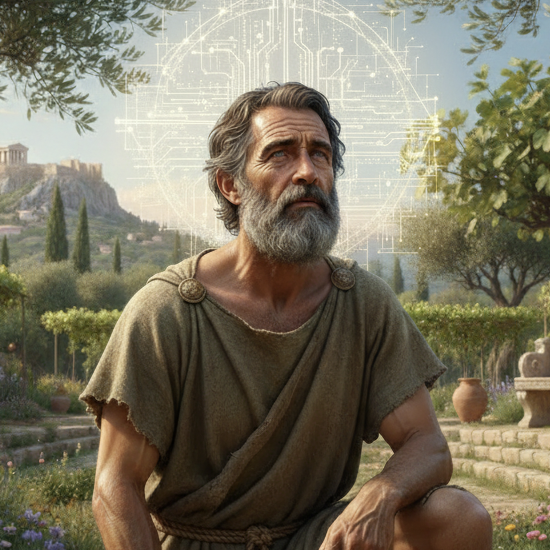
There is a Greek word — nostos — for the ache of returning home. Every grief is a kind of homecoming to a place that no longer exists. The old stories knew this. They didn’t try to fix it. They sat with it.
Storyteller — old stories that tend to know things.
Frequently Asked Questions
Is this grief counselling?
No. Asclepiad isn't counselling — it's a private space to be with your grief. Maia listens and reflects. If you need professional support, we'll always point you toward it.
Can I use this years after the loss?
Absolutely. Grief doesn't have a timeline. Whether it's been weeks or years, what you're carrying is valid and Maia is here for it.
What if my grief is complicated?
Most grief is. Maia can hold the mixed feelings — love, anger, relief, regret — without needing you to simplify them.
Is it private?
Completely. No sign-up, no name, no email. Your conversation stays within the session.
If you're ready to be heard — not fixed, not optimised, just heard — Maia is here.
Talk to MaiaNo sign-up. No programme. Just presence.