Midlife Crisis — When the Life You Built Stops Feeling Like Yours
Somewhere in your forties, something shifts. It might arrive suddenly — a birthday, a health scare, the death of a parent, a moment where you look at your life and feel strangely like a stranger in it. Or it might come gradually, a slow accumulation of mornings where you wake up and the life around you feels like someone else's set.
The midlife crisis gets a lot of jokes. The sports car, the affair, the sudden pivot to something improbable. But underneath the clichés is something real and serious: the reckoning with time, identity, and meaning that tends to arrive when you're somewhere in the middle of your life and the end is close enough to see.
What's Actually Happening
There's a particular quality to midlife disorientation that distinguishes it from other kinds. You're not lost in the way a 25-year-old is lost — without direction, still forming. You've built a life. You made choices, followed through, created something. And now you're standing in it, and something doesn't fit.
This can be genuinely confusing, because from the outside the life looks successful. You have the things you were supposed to want. The job, the house, the relationships, the responsibilities. And yet the wanting isn't there anymore, or never was in the way you thought it would be. The arrival didn't feel like you expected it to feel.
This is not ingratitude. It's not a failure to appreciate what you have. It's an encounter with a gap between the life that was expected of you and the life you actually want — a gap that was always there but could, for a while, be outrun by busyness and forward momentum.
The Time Problem
What makes midlife distinct is the arrival of time as a felt reality. In your twenties, the future is abstract and expansive. In your forties, you start to do the maths. You can see, roughly, where the arc is going. The question "what do I want to do with my life?" suddenly has a much more urgent quality, because the answer now has to be: with the life I have left.
This is uncomfortable. It's also, if you can sit with it, clarifying. The urgency that comes with a shorter timeline cuts through a lot of noise. Things that were vague become specific. What actually matters becomes harder to avoid.
When What You Built Was Someone Else's Blueprint
For many people, the midlife reckoning involves recognising — often for the first time with real clarity — that the life they built was built largely to specifications set by other people. Parents. Culture. The path that was laid out before them. The career that made sense, the relationship that was expected, the version of success that was held up as the target.
None of that was dishonest. You followed the map that was given to you, and you followed it well. But the map wasn't entirely yours. And now, somewhere in your forties, you're asking: what would I build if I were starting from what I actually value?
This question is both frightening and genuinely important. It often comes with grief — for the roads not taken, for the version of yourself that got deferred. That grief is worth taking seriously.
Not a Crisis — A Threshold
The word "crisis" is not wrong, exactly, but it's incomplete. What's actually happening in a midlife reckoning is closer to a threshold experience: a transition point, uncomfortable by nature, that opens onto something different on the other side. The people who come through midlife transitions with a genuine sense of renewal and direction didn't escape the discomfort — they moved through it.
Moving through it requires honesty. About what you actually want. About what you've been avoiding. About which parts of your current life you'd choose again and which ones you're maintaining out of inertia or obligation or fear.
Asclepiad is a space for exactly this kind of honest reckoning. Maia doesn't need you to have answers. She'll be there for the questions — patient with the ones that don't resolve quickly, genuinely curious about what's underneath the surface. And Hortus carries stories that know this territory: figures in the middle of their journeys, far from both the beginning and the end, finding that the path requires something new of them.
You don't have to know what's next. You just have to be willing to look at what's true.
---
The middle of the story is the hardest part. Maia is here for it. asclepiad.ai/?context=identity
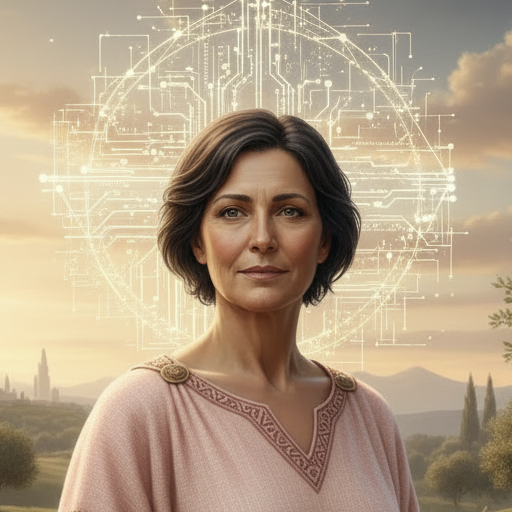
Not knowing who you are right now isn’t emptiness. It’s the space before something honest takes shape.
Your AI guide — here to listen, without judgment.
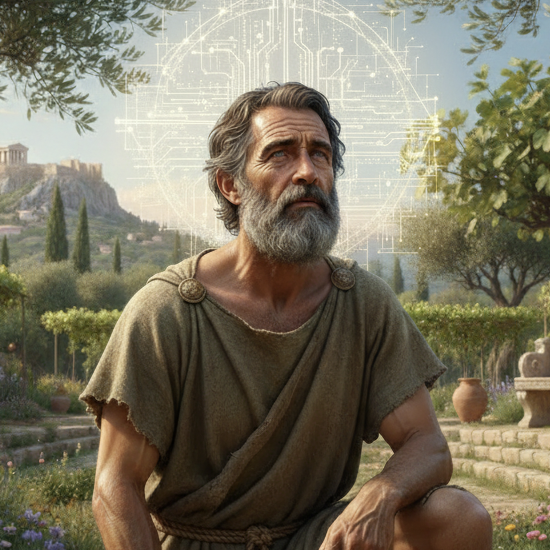
The oldest question in every tradition isn’t who am I? It’s who am I becoming? The stories that survive are the ones that leave room for the answer to change.
Storyteller — old stories that tend to know things.
Frequently Asked Questions
Is a midlife crisis a real thing?
Yes — though 'crisis' may be the wrong word. Research supports the idea of a midlife transition: a period of re-evaluation around meaning, identity, and direction that many people experience in their 40s and 50s. It's not pathological. It's developmental.
Can Asclepiad help with a midlife crisis?
Asclepiad isn't a coaching service or therapy substitute. Maia offers a space for honest reflection — exploring what you actually want, what you're carrying, and what the reckoning is actually about. That honest exploration is often what's most needed.
Is it anonymous?
Yes. No account, no name, no email. Completely private.
What if I don't want to blow up my life?
Good — this isn't about blowing anything up. It's about understanding what's actually happening beneath the restlessness, and making choices from clarity rather than panic. That's what honest reflection supports.
If you're ready to be heard — not fixed, not optimised, just heard — Maia is here.
Talk to MaiaNo sign-up. No programme. Just presence.