Personal Transformation — What It Actually Costs and What It Actually Gives
Personal transformation is one of the most marketed concepts in the self-help space, and one of the most misrepresented. The marketing version is clean: identify the better self, follow the system, become them. Before and after. The transformation is presented as an upgrade — same person, better version.
The reality is messier, slower, and more interesting than that. Real personal transformation isn't an upgrade. It's more like a becoming — a process that involves loss as much as gain, that tends to destabilise things you weren't expecting to destabilise, and that often doesn't look like progress from the inside when it's actually happening.
What You're Leaving Behind
One of the underacknowledged costs of genuine change is what you leave behind. This includes the obvious things: habits, behaviours, patterns you want to move away from. But it also includes the identity that was built around those things.
If you've been someone who people could rely on to say yes, changing that means some people will be disappointed. If you've been the person who manages everything, stepping back from that means other people have to step up — and they may not welcome it. The version of you that held things together, even if it was unsustainable, was also serving other people's needs. Changing tends to have relational consequences.
This is not a reason not to change. It's a reason to know what you're actually doing when you set out to transform.
The Continuity Problem
Personal transformation raises a philosophical question that's worth sitting with: if you change significantly, in what sense are you still you? There's a continuity of memory, of body, of name. But the values, the patterns, the way of being in the world — if those change substantially, how do you understand the relationship between who you were and who you're becoming?
This isn't just abstract. It shows up practically in the disorientation of being in the middle of change — not quite the old self anymore, not yet the new one. The in-between state, which can last years, has its own particular quality: a lostness that's actually evidence of movement, a not-knowing that means the old template has released without the new one being fully formed.
Transformation vs Improvement
There's a useful distinction between improvement and transformation. Improvement is additive — becoming better at things, developing skills, optimising what's already there. Transformation is structural — the change is to the underlying architecture, not just the outputs.
Improvement tends to be comfortable. You stay recognisably yourself and get better at being that self. Transformation is uncomfortable by nature, because the self that would be comfortable with the change is the self you're not yet.
Most of what's sold as transformation is actually improvement. Real transformation — the kind that emerges from a genuine encounter with what needs to change and why — tends to be humbling, slow, and difficult to brand.
What It Actually Requires
Real personal transformation tends to involve:
Honesty about what's actually true — not the curated version, not the aspirational version, but the unedited account of where you are, what's working, and what isn't.
Willingness to be uncomfortable — not for its own sake, but because the patterns that need to change are defended, and meeting them requires tolerating the discomfort of that encounter.
Time — real change in deeply embedded patterns takes years, not weeks. Anything promising faster tends to be surface-level.
Some form of witness — a relationship, a space, or a practice where the honest version of the process can be seen and held.
Asclepiad is a space for the honest version. Maia won't provide a system or a programme. She'll be present with the process — the slow, non-linear, genuinely difficult work of becoming someone different. She'll ask about what you're leaving and what you're moving toward. She'll hold the in-between without needing to rush it.
Because transformation, the real kind, doesn't happen to order. It happens in the patient, honest encounter with what's true.
---
Change is already happening. Maia is here for the honest middle of it. asclepiad.ai/?context=identity

Not knowing who you are right now isn’t emptiness. It’s the space before something honest takes shape.
Your AI guide — here to listen, without judgment.
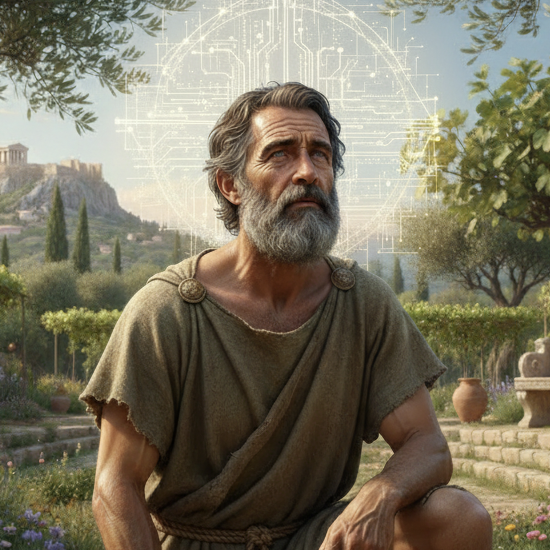
The oldest question in every tradition isn’t who am I? It’s who am I becoming? The stories that survive are the ones that leave room for the answer to change.
Storyteller — old stories that tend to know things.
Frequently Asked Questions
Can Asclepiad help me transform my life?
Asclepiad won't provide a system or a programme. Maia is present for the honest process — the slow, non-linear work of becoming someone different. She'll ask about what you're leaving and what you're moving toward, without rushing the middle.
Is this a self-help tool?
Not in the conventional sense. Asclepiad doesn't offer steps, hacks, or frameworks. It offers a space for honest reflection — which is where real change tends to begin, even though it doesn't look like productivity.
Is it anonymous?
Yes. No sign-up, no name, no email. Completely anonymous.
What if I don't know who I'm becoming?
That's normal in the middle of genuine transformation. The not-knowing is evidence of movement, not stagnation. Maia is comfortable with uncertainty — she'll hold the space while the new form emerges.
If you're ready to be heard — not fixed, not optimised, just heard — Maia is here.
Talk to MaiaNo sign-up. No programme. Just presence.