Quarter Life Crisis — When You're Too Young to Feel This Lost
There was supposed to be a point where you'd know. Where things would click into place and you'd have a sense of who you are, what you're doing, and why. That's the promise, more or less, that everything before this moment was pointing toward. Education, then life. Preparation, then arrival.
And yet here you are — 24, or 27, or staring down the barrel of 30 — and you don't know. Not the big things. Not the quiet ones. What you want. Who you are without the structure of a school or a course or a relationship or a plan that belonged to someone else's idea of you. What any of it is for.
This is sometimes called a quarter-life crisis. The name is partly joking. It's also completely accurate.
The Myth of Arriving
One of the things nobody tells you about entering adulthood is how much of it is still becoming. The assumption — the one baked into every graduation speech and every "what do you want to do with your life" question — is that by now you should know. You should have arrived at yourself.
But identity doesn't work that way. It's not a destination you reach. It's something you're always in the process of working out — especially in your twenties, when you're encountering yourself in new situations for the first time, without the scaffolding of everything that came before.
The disorientation of a quarter-life crisis is often the disorientation of being more free than you've ever been, without yet having developed the internal compass to navigate that freedom. You can do almost anything. And you don't know what to do.
When the Life You're Living Doesn't Feel Like Yours
A significant part of the quarter-life crisis is the dawning recognition that some of the choices you've made — the degree, the career path, the city, the relationship, the version of yourself you've been presenting — weren't quite yours. They were good choices, approved choices, expected choices. But when you look at them now, they feel like they were made by someone who was trying to get it right rather than someone who knew what they wanted.
This recognition can feel like failure. It's not. It's the beginning of something. It's the moment when you start asking the question that couldn't get heard before: what do I actually want?
That question is uncomfortable. It has no clean answer. And it tends to arrive before you have the tools to answer it, which is why the crisis often feels like such a crisis.
Feeling Lost After Graduation
The end of formal education removes a structure that most of us didn't realise was holding us together. Suddenly there's no syllabus, no next year, no obvious next thing. The container that organised time, social life, and identity is gone — and what's left is a formless openness that can feel terrifying.
This is often described as feeling lost. Which is accurate. But it's worth noting that lost, as a state, usually means: I know there's somewhere to go. I just don't know how to get there. The compass isn't broken. It's just being calibrated for conditions you've never been in before.
On Finding Yourself
The phrase "finding yourself" gets a lot of ironic use. Partly because it sounds like an airport self-help book. Partly because the idea of a fixed self to be found is itself a bit of a fiction — you're not hidden, waiting to be uncovered. You're being made, through choices and conversations and experience and reflection.
But what the phrase is gesturing toward is real: there's work to do, and it's inward. It involves honesty about what you value, what drains you, what lights something up even when it's inconvenient. It involves sitting with questions that don't have immediate answers, and trusting that the sitting is doing something even when it doesn't feel like it.
Asclepiad is designed for exactly this kind of work. Not a crisis service. Not a career counsellor. A space where you can think out loud — with Maia as a companion who won't project a particular answer onto your situation, and who will hold your questions with patience and genuine curiosity.
The old stories know this territory too. Arjuna on the battlefield, paralysed in the face of choice. Odysseus, years past the expected arrival time, still finding his way home. The hero's journey, in almost every tradition that has one, involves a period of disorientation — of being lost in the middle, not yet knowing what the ending will be. The disorientation is not a detour. It's the path.
---
You don't need to have it figured out. You just need somewhere to start figuring. asclepiad.ai/?context=identity
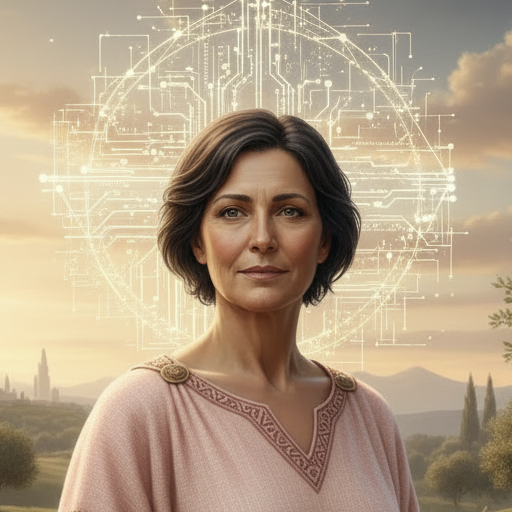
Not knowing who you are right now isn’t emptiness. It’s the space before something honest takes shape.
Your AI guide — here to listen, without judgment.
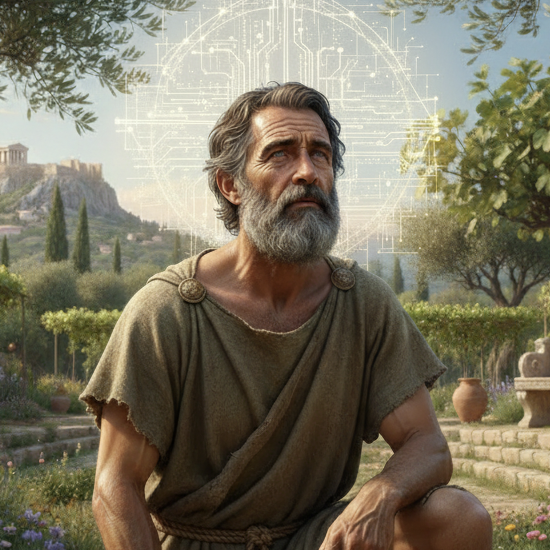
The oldest question in every tradition isn’t who am I? It’s who am I becoming? The stories that survive are the ones that leave room for the answer to change.
Storyteller — old stories that tend to know things.
Frequently Asked Questions
Is a quarter-life crisis a real thing?
Yes. Research consistently shows that the mid-to-late twenties are a period of significant identity questioning for many people. The experience is real, common, and worth taking seriously.
What if I'm past my twenties?
Identity questions don't expire at 30. Whether you're 25 or 45, the experience of not knowing who you are or what you want is valid — and Maia is here for it.
Is this life coaching?
No. Asclepiad doesn't give advice or set goals. Maia is a companion for honest exploration — she helps you think, not tells you what to think.
Do I need to know what I want before starting?
Absolutely not. That's the whole point. Maia meets you where you are, even if where you are is 'I have no idea.'
If you're ready to be heard — not fixed, not optimised, just heard — Maia is here.
Talk to MaiaNo sign-up. No programme. Just presence.