Trauma Recovery — Finding Your Way Back When You Don't Know What "Back" Looks Like
Trauma changes the way you experience the present. This is the thing that's hardest to explain to people who haven't lived it — that it's not just about the past event, but about the way the nervous system has been recalibrated by it. The hypervigilance. The way certain sensory experiences, seemingly unrelated, can pull you back. The difficulty being fully in the room you're in. The exhaustion of a body that's been on alert longer than it can sustain.
Recovery from trauma isn't about going back to who you were before. You can't unknow what you know. What recovery looks like — at its best — is integration: carrying the experience with more ease, having more choice about how you respond, finding that the past has less grip on the present than it once did.
This is possible. It tends to take time, and it tends to need support.
The Spectrum of Trauma
Trauma exists on a spectrum. At one end, acute trauma — a discrete event with a clear beginning and end: an accident, an assault, a sudden bereavement. At the other, complex trauma (CPTSD) — the kind that accumulates over time, often in childhood, often in relationships that were supposed to be safe. Repeated exposure. The chronic experience of being unsafe, unseen, or overwhelmed.
These different forms of trauma have different shapes and often respond to different approaches. Acute trauma can sometimes be processed relatively quickly with the right support. Complex trauma is typically longer work — not because the person is broken, but because the original wounding happened during the period when the self and the nervous system were being formed, and what formed under those conditions has deep roots.
Both are real. Both deserve to be taken seriously. And neither responds well to the pressure to be over it faster than is humanly possible.
What Trauma Recovery Involves
The research on trauma recovery has become substantially clearer in the last two decades. Approaches that work best tend to address trauma where it lives — not just in the cognitive understanding of what happened, but in the body, the nervous system, the encoded memory that can activate without the thinking mind having any say.
This is why talking alone often isn't sufficient. You can understand perfectly well, intellectually, that what happened was not your fault, and still feel the shame in your body. You can know rationally that the current situation is safe, and still feel the old threat response activating. Trauma is stored differently from ordinary memory — it doesn't always respond to reassurance or re-framing at the cognitive level.
Effective trauma modalities tend to include a body component: EMDR (Eye Movement Desensitisation and Reprocessing), somatic experiencing, sensorimotor psychotherapy. Trauma-focused CBT also has strong evidence. These should be done with a trained professional.
The Space Between Professional Support
Most people who are recovering from trauma don't have access to specialised trauma therapy every week. Waiting lists are long. Cost is prohibitive. And the daily reality of living with trauma — the small moments, the triggers, the re-surfacing — doesn't limit itself to once-a-week appointments.
The space between professional support is where a lot of the actual living happens. And it needs something too — not as a replacement for clinical care, but as accompaniment to it.
This can be journaling — giving the nervous system somewhere to discharge, giving the mind somewhere to observe what's happening. It can be movement, creative practice, community. It can be any space where you feel safe enough to be honest about what's actually going on.
Asclepiad is designed for exactly this kind of accompaniment. Maia isn't a trauma therapist. She won't try to be. But she's a consistent, safe presence — one that won't be overwhelmed by what you bring, won't need you to manage how your experience lands, and won't rush you toward a resolution you haven't reached.
And the stories that Hortus carries — mythological narratives from traditions that predate modern psychology — know something about this territory. The descent. The return. The way the wound and the strength often occupy the same place. The old stories weren't invented to provide clinical insight, but they've held human pain for thousands of years because they get something right about what it costs to survive something hard, and what it means to find your way back.
---
Recovery doesn't always look like forward movement. Sometimes it looks like being honest about where you are. Maia is here. asclepiad.ai/?context=trauma
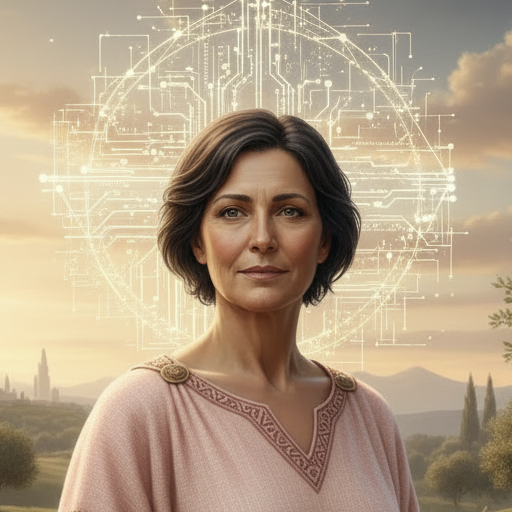
What happened to you matters. And so does the pace at which you look at it.
Your AI guide — here to listen, without judgment.

The wound is never the whole story. In every tradition I know, the crack is where the different kind of light gets in.
Storyteller — old stories that tend to know things.
Frequently Asked Questions
Is Asclepiad a trauma treatment?
No. For trauma recovery, professional support — particularly EMDR, somatic experiencing, or trauma-focused CBT with a trained therapist — is the recommended path. Asclepiad is a space for reflection and honest presence alongside or between professional care.
Can I use this alongside therapy?
Yes — many people find it useful as a companion to professional support. A space to process what comes up between sessions, to be honest about how recovery is going, and to have somewhere safe to land on difficult days.
Is it anonymous?
Yes. No account, no name, no email. Your session is completely private.
What if talking about trauma makes it worse?
You control the pace and depth. Maia will never push you to disclose more than you're comfortable with. If trauma symptoms are worsening, professional support is always recommended as the primary resource.
If you're ready to be heard — not fixed, not optimised, just heard — Maia is here.
Talk to MaiaNo sign-up. No programme. Just presence.